| OCR Text |
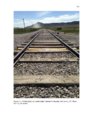
Show 154 of perception. The train demonstrated that space and time are mere variables that could be put into new associations with steel, coal, and electricity to build a network of relations that ushered in an entirely new age of perception. The train helped the Union win the Civil War. It made large-scale mining possible. It even created Yosemite National Park. In other words, the train industrialized the modern world by creating new sensory modes of progress that enabled the United States to achieve industrial greatness without depending on laws of nature to control production. This contagious perceptual force penetrated the SCOTUS. The final section of this chapter discussed how the railroad was able to expand its network to the SCOTUS in Santa Clara County v. Southern Pacific Railroad Co. In this two-part section, I have argued that it was not reason that compelled the Court to extend equal protection to corporations; it was commonsensical. Santa Clara may have been a historical accident, but it was an event that made corporate subjectivity a legal precedent. The humanist belief that communication is centered on rational intentionality does not work for the corporate subject because forces, alliances, and networks, not good reasons, created the corporate legal assemblage. Even the most reasonable, modernist actors in the country - the SCOTUS - could not evade the fact that rhetoric is an irreducible force that exceeds rationality and the myth of intentionality. The justices, like everybody else, realized that railway companies had demonstrated that they are not only equal, but far superior to other governmental, mechanical, and public assemblages of the social. Whether they knew it or not, railway companies had already won. Since the Supreme Court operates on the assumption that laws evolve over time, and that the most rational argument must prevail, legalists still had to craft a vocabulary |