| OCR Text |
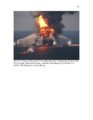
Show 289 public relations strategy because it made the oil sheen disappear. Corexit was a prop for image events of a clean Gulf. According to Mark Hertsgaard (2013), the PR strategy was so effective that by July 2010 the Associated Press and The New York Times began to ask whether the impact of the spill was as significant as publics originally thought. Time even acknowledged that Rush Limbaugh "has a point" when he said various journalists and environmentalists were blowing the oil spill out of proportion (Hertsgaard, 2013). Even though some may have felt that bp "lied" about the toxicity of Corexit when it said the dispersant is "as safe as dish soap," from a nonhumanist pragmatic perspective, truths and lies are irrelevant to the networks of corporate subjectivity; the only thing that matters is that bp associated its logo with an oil-free Gulf, and it worked. Making oil disappear was a strategic move that set the stage for bp to argue that it was a responsible corporate subject that took environmental issues seriously. Dispersing Corexit was thus the first step taken to repair bp's damaged visual network. The invisibility of oil allowed bp's logo to propagate among corporate image events of oilfree beaches, birds, and marshes and wetlands, which came in stark relief to other image events of explosions (see Figure 5.7), oily water, and dead or dying birds. bp's logo was associated with soothing images that told publics bp has worked hard to clean this place up so that human and nonhuman communities could return to life. According to Beam (2010), although bp may have botched a few apology statements by deflecting accountability and undercutting the full scale of the disaster, it did an excellent job stabilizing public relations on its website and social media outlets such as Twitter and Facebook by uploading pictures, images, and maps of the cleanup. Commenting on bp's online PR strategy, Larry Smith from the Institute of Crisis Management said, "I'd have |