| OCR Text |
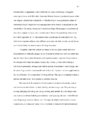
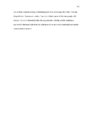
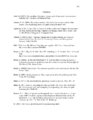
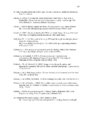
Show 28 not many critics have theorized how nonhuman entities, with no sentient bodies, can also become active rhetorical subjects. Understanding the ways animals exert rhetorical agency is a productive step forward, but research has yet to advance the study of how corporations are also rhetorical subjects. Corporations are exceptional because they are not only nonhuman, but unlike animals, they have no bodies, no souls, and no flesh. They are invisible subjects that remain abstractions that become subjectivized through assemblages that give them force. As John Law (2002) has argued in Aircraft Stories, even abstractions that never come into existence, such as the TSR2 aircraft carrier, can have social and political agency and can also constitute subjects. Objects, too, Law reminds us, are decentered multiplicities that maintain what he calls "fractional coherence" through relations that hold them together without a center (p. 2). Similarly, corporations are held together, as subjects, through the networks of relations established in legal settings, in communities, and in visual contexts, without sentient bodies. This phenomenon leads this researcher to posit that either the reversed hierarchy between mind and body insufficiently addresses how nonhuman, disembodied actors become subjects, or that the very concept of the body should be rethought. As Baruch Spinoza once famously said, as paraphrased by Gilles Deleuze: "We don't even know what the body can do" (Deleuze, 1962/2006, p. 39, emphasis original). This is a matter that will be discussed in Chapter 2, Chapter 4, and Chapter 6. Altogether, even though important strides have been taken to consider the rhetorical possibilities of the poststructural subject, researchers have not yet examined how nonhuman, nonsentient, invisible actors, or abstract objects, perform rhetorical subjectivity. To overcome this limitation, this doctoral dissertation traces corporate |