| OCR Text |
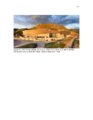
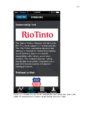
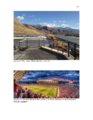
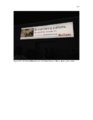
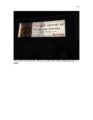
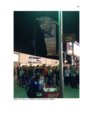
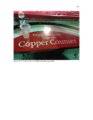
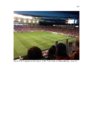
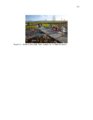
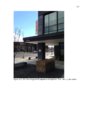
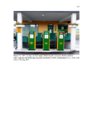
Show 209 course, Rio Tinto. Many of these subjects are hailed on banners or small billboards, but some, particularly on the northwestern and southwestern corners, are screens that constantly flash logos, corporate slogans, and video advertisements. On the stadium's two main screens, even Rio Tinto is accompanied by Xfinity, which is also stitched into the fabric of the structure. They are also accompanied by America First Credit Union, Budweiser, and LifeVantage, which ephemerally pop up on the main screen. The list goes on: more screened subjects, more billboards in the rafters, and even seated communities sponsored by corporations. The point is that Rio Tinto is not an authoritarian corporate subject at the Rio Tinto Stadium. It is among a community of corporate actors that are all part of the cultural experience of RSL matches. Together, they form a fellowship of soccer that articulate spectators as multiple corporate subjects that give corporations bodies and souls. In a way, these corporate citizen-subjects are cosmopolitan because they are provincial and worldly, local and global. This corporate community has representative actors from all over the world, and each one is rivaling for attention. RSL fans are not only athletic supporters, but they are also consumers. Deleuze (1972/1995) says that one of the primary differences between Foucault's (1975/1995) disciplinary society and the society of control is that the latter is comprised of "businesses," not "confinements," that are constantly introducing an inexorable rivalry presented as healthy competition, a wonderful motivation that sets individuals against one another and sets itself up in each of them, dividing each within himself" (p. 179). A page later, he loosely characterizes this person as a "dividual," who is a product of the collapsed distinction between the individual and the masses. At the Rio Tinto Stadium, the culture of fandom is in collective harmony, but the individual is also torn, split, and |