| OCR Text |
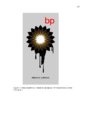
Show 307 branded affective arguments when it rebranded its visual assemblage, it struggled restoring its visual credibility after Deepwater Horizon because it produced a persona that was singular, rational, and responsible, which placed bp on an argumentative plane of consistency that privileged truth-seeking arguments from morally outraged publics and stakeholders. Ultimately, though, bp's visual assemblage still propagates as an irrational networked corporate subject, and it remains one of the top five petroleum industries in the world (Agnihotri, 2015). This indicates that even though environmental crises may slow down corporate subjects, they still have more networks that not only exceed, but are more forceful than, humanistic standards of representation. Altogether, corporate subjects use image events alongside sounds and video documentaries to politically engage the world on public screens and stabilize, rather than rupture, lines that construct the networked corporate subject. Logos are foundational to the concept of the corporate subject because they forcefully create affects that give corporations personality among a near infinite amount of associations, assemblages, and rhizomes. Logos are both transmutable and mobile, and they have become supplements to the visual absence of the corporation's biological body. They give the corporate subject a persona that affectively moves publics to join their network. The concept of the corporate subject escapes the presence of meaning because corporations are neither here nor there, but they are also everywhere. They are always moving, changing, becoming, and doing one thing after another. But one thing is sure: corporations are always building new relations - and repairing old ones - with different assemblages to produce something new. The corporate subject is thus never the same subject twice, so it makes no sense to try to pin them to structures of representation and |