| OCR Text |
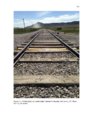
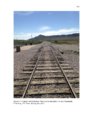
Show 113 constitutional equality in the 19th century, which is the basis for understanding the legal assemblage of corporate subjectivity. This chapter is organized as follows. First, I engage with the concept of the ideograph in order to theorize how corporations, like people, fought for certain equalities during the post Civil War era. Second, I discuss how the law is an assemblage that cannot be contained within the realm of the courts. Third, I offer a concise history of corporate law to see how the idea of the corporation has changed since its original inception. This section helps readers understand that corporations were not always considered equal, or even superior, to the states, publics, and lawyers that created them. Fourth, I analyze the force of the American railway and discusses how this technological invention not only ruptured previous conceptualizations of space and time, but also penetrated mechanical, political, and legal assemblages that eventually paved the way for corporate constitutional equality. Finally, this author analyzes how the railway evoked debates about "corporate personhood" within the courts. This section engages with various legal arguments regarding the ontology of corporations to demonstrate how the advent of the transcontinental railroad created networks that necessarily changed the law. Altogether, it is the contention of this chapter that corporations, as nonhuman entities, secured legal equality with the force of their transcontinental networks, not with the reasonableness of their arguments. (Re)Crafting Equality From an Actor-Network Perspective Santa Clara County v. Southern Pacific Railroad Co. granted corporations the right to equal protection under the Fourteenth Amendment of the U.S. Constitution. Although its inscription may have been accidental, this Supreme Court decision nonetheless broadened its interpretation of equality to nonhuman objects for the first time |