| OCR Text |
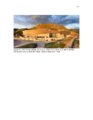
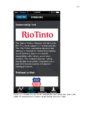
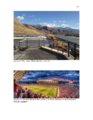
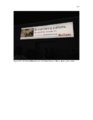
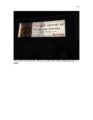
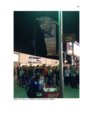
Show 184 many emotions that occur when visitors interact with the museum's fun, thoughtprovoking exhibits and spectacular objects. Inside the museum, visitors take on many roles. They are first and foremost scientific explorers. They can measure the current seismographic activity of the Salt Lake Valley, learn about Utah's bird migration patterns, see the detailed habitats of desert life forms, and survey ancient dinosaurs that roamed Utah's environment during the late Cretaceous and Eocene eras. They are also hydrologists who can simulate changing water levels of the historical Lake Bonneville, geologists who can identify precious rocks and minerals found in Utah, and cultural anthropologists who can learn about the rituals and traditions of Utah's Shoshone, Goshute, Paiute, Ute, and Navajo nations. They are even phenomenologists who can smell "dinosaur dinner," sage, or lilacs, become immersed in a desert life panorama, and physically experience the cool climate of replicated ancient cave dwellings. NHMU visitors are many different subjects at the same time and they all associated with Rio Tinto's network of corporate community. Rio Tinto is a good neighbor that helps children realize how exciting science can be. In the words of the NHMU Director of Development, the driving purpose of the designers, architects, curators, and public and private partners was to "create a flagship cultural educational institution…rooted in science education that inspires the next generation of scientists…[by] illuminat[ing] the natural world of a place with humans in it" (Personal Interview, NHMU, March 2015). The museum is designed to be a place of scientific inspiration because it enables society's youth to take on the role of a scientific explorer. Rio Tinto's partnership with the NHMU is not something that draws attention. Rio Tinto is hardly conspicuous at all. It is just part of the community network. This is an |