| OCR Text |
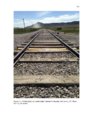
Show 133 longstanding trajectory of constitutionally protecting corporations as people. Although many have talked about the importance of Santa Clara County v. Southern Pacific Railroad Co. in the context of corporate personhood (Hartmann, 2010; Horwitz, 1985; Logan, 2013; Winkler, 2006), not many have analyzed how the railroad's rupturing of space, time, and perception aggregated entirely new networks of industrialization by creating new alliances within socio-economic, political, and even legal arenas. In other words, to see how corporations became people, we must trace the industrial network back to the railroads and try to see the world from their point of view. While Santa Clara County v. Southern Pacific Railroad Co. was indeed evental in that it catalyzed a new history of corporate personhood as natural entities under the doctrine of stare decisis, it was ultimately the train, not the courts that made the most powerful arguments about corporate subjectivity. As such, it is time to turn attention to the networks of this object to better understand how this rhetorical actor recruited allies in the legal assemblage to do its bidding. The raw force of the railway obliterated all conceptualizations of space and time and established an entirely new perspective about the possibilities of modern industrial progress (Schivelbusch, 1986). This story will encounter numerous natural obstacles that were overcome by the train to create an industrial modality of living that spread like wildfire during the Reconstruction Era. Additionally, we will see how the train made powerful allies such as coal, the telegraph, and the steam engine, which turned this network into one of the most forceful aggregations that this country has ever witnessed.24 24 It is important to keep in mind the relations that are not mentioned because they simply did not have the resources to ally with the railroad - namely Black men and women. |