| OCR Text |
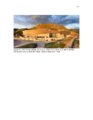
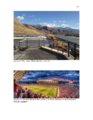
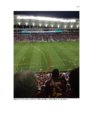
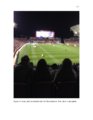
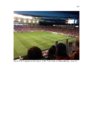
Show 172 subject, but a "citizen-subject" (see Biesecker, 2002, 2007) established through the local cultural "cottage industry" (Biesecker, 2002, pp. 405-406). Rio Tinto, however, is no ordinary citizen-subject, because it owns and operates the largest open pit copper mine in the world - the Bingham Canyon Mine. Located in the country of the Oquirrh Mountain Range, this mine has a rich history of science, technology, and community involvement driven by what Williams calls the twin ethics of "improvement and progress" (Williams, 1975, p. 293). Rio Tinto uses its networked identity in the Salt Lake Valley to secure a visual articulation of the Bingham Canyon Mine as a hallmark of industrial progress. On the theoretical level, this argument is centered on the assumption that corporations use their networks of subjectivity to control, rather than discipline, societies about how to understand the object of their industrialization such as the Bingham Canyon Mine (see Deleuze, 1972/1995). To support this argument, this chapter begins with a discussion about mundane places of corporate community and the uniqueness of copper to Rio Tinto's corporate community. Next, I rhetorically analyze three places of corporate community in Salt Lake City: The Utah Museum of Natural History, The Rio Tinto Stadium, and the Daybreak Community of Suburban Living. Altogether, this chapter hopes to demonstrate that Rio Tinto uses its networks of corporate community to stabilize its subjective citizenship in Salt Lake City. The Networks of Copper: A Roadmap to Salt Lake City's Society of Control The mundane is everything when considering how Rio Tinto establishes corporate subjectivity in Salt Lake City, UT. While the Bingham Canyon Mine evokes an awesome sublime aesthetic, or what Peeples (2011) calls the "toxic sublime," Rio Tinto creates a |