| OCR Text |
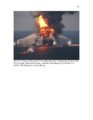
Show 288 When Visual Networks Are Antagonized: How bp Propagated Its Logo During Environmental Crisis In Brand Aid: A Quick Reference Guide to Solving Your Branding Problems and Strengthening your Market Position, Brad VanAuken states that the test of a strong brand is determined by how it withstands crisis. And no doubt about it, the Deepwater Horizon Oil Spill was a crisis. It released nearly five million barrels of oil into the Gulf of Mexico over an 87-day period (EPA, 2015). Altogether, this was more than 210 million gallons of oil, or 3.4 million per day (NYT, 2012), which is nearly 16 times more oil spilled than the 1989 Exxon Valdez spill (NWF, 2015a). To CBSNews, Deepwater Horizon was an "apocalypse in the Gulf" (Phillips, 2010). While only 11 of 119 workers died, with 19 injured, more than 8,000 nonhuman animals - including birds, sea turtles, and other marine mammals - were discovered dead or injured within only six months after the spill (NWFb, 2015). Entire networks of life, including keystone species such as starfish and coral, have been threatened with extinction (Walsh, 2011). In responding to the visual scale of this antagonism, bp attempted to repair its networks in three ways: it made oil disappear, it used its website as a storehouse of knowledge that used images as proof the Gulf was clean, and it disseminated image events that created a committed, trustworthy corporate persona. bp put all of its immediate efforts into making the oil invisible. It sprayed two chemical dispersants called Corexit 9500 and Corexit 9527 to disperse the oil. Corexit, short for "corrects it," breaks up large quantities of oil into trillions of droplets invisible to the eye that then sink to the bottom of the ocean. Although this came with controversy from scientists and environmental advocates (Keim, 2010), it was nonetheless a brilliant |