| OCR Text |
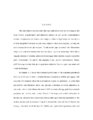
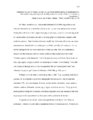
Show 148 legal theorist Otto von Gierke (1900/1958), who argued that organizational groups, including corporations, had real personality, or "corporate personality." To him, the corporation is nothing shy of a real and natural existence. This argument circulated throughout Germany, France, England, and America, and gained the attraction of lawyers, jurists, and political thinkers. Gierke's argument was made popular in America when Frederic Maitland published part of Gierke's research in Political Theories of the Middle Age, and afterward, University of Chicago Professor Ernst Freund (1897) published The Legal Nature of Corporations in 1897 (Horwitz, 1992, p. 71). These seminal works, in conjunction with the performed subjectivity of corporations in the postwar economy, allowed the realists, such as Arthur Machen (1911), to make compelling arguments about the inevitable demise of grant theory and the rise of the natural entity theory of the corporation. As Machen (1911) observed: "A corporation exists as an objectively real entity, which any well-developed child or normal man must perceive: the law merely recognizes and gives legal effect to the existence of this entity" (p. 261). The natural entity theory was used to support a growing position of corporate personality that many have attributed to the seemingly improvisational character of Bancroft Davis's headnote. But as Morton Horwitz (1985) has argued, the corporate personality thesis was still unsettled when the Court made its decision in Santa Clara v. Southern Pacific Co. because Legal Realists had not yet developed their case for corporations as natural entities. It was in the years after Santa Clara, once philosophical debates had swirled around the nation's political legal sphere, that the idea of corporate personhood began to fully resonate with legalists. While this perspective may have |