| OCR Text |
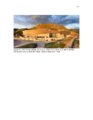
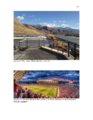
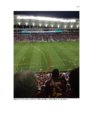
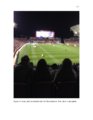
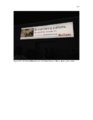
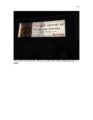
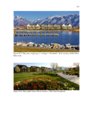
Show 221 and forms the basis of ethical social relations: labor" (p. 120). In contrast to such a conclusion, we can see that there is no crisis of community at Daybreak. In fact, if we understand community as a relational, rather than historical, accomplishment then we can recognize that Daybreak is a cosmopolitan community that is diversely networked with Rio Tinto, families, the Bingham Canyon Mine, and Salt Lake City. Although the case can be made that Rio Tinto is trying to establish roots at Daybreak to maintain its communal subjectivity even after the life of the mine expires, a more immanent reading reveals that Rio Tinto's corporate community is not at all about roots, but about territories. Daybreak, like the Rio Tinto Stadium and the Natural History Museum, is a place of corporate community that imbues corporate subjectivity into the architecture of the very idea of community. Rio Tinto does not do this to establish a foundation for what the ideal corporate community should look like, or may look like in the future, and it does not project a material aesthetic that is a remedy to the rootlessness of the American community. It certainly does not do this to assert its hierarchical, sovereign power over feudal publics duped into thinking that Daybreak's Toxic Waste is Good for You, as some dominant ideologists, such as Stauber and Rampton (2002), may infer. Rio Tinto is simply allying with the communities that it has invited to live on its reclaimed land. Creating a sustainable community not only broadens Rio Tinto's network of corporate subjectivity, but it also articulates this corporate citizen-subject as ally of the environment. So while McAlister (2009), Putnam (2001), and Weil (1949/2001) all raise important concerns regarding the idea of community in the suburbs, they all assume an ideal, arborescent community that matures with time. The idea of community should |