| OCR Text |
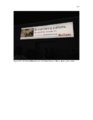
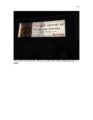
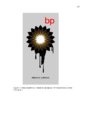
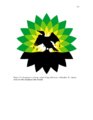
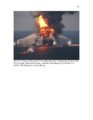
Show 267 protestor's image event thus appear to be similar by rhetorical incongruity since they depart on what Robert Rowland (1982) has called argument purpose. Besides the fact that they both rely on the Derridean concept of dissemination through visual cultures of mediation and transmutations, the logo functions as a pragmatic that oftentimes sutures, stabilizes, and secures rather than ruptures, breaks, and opens grids of intelligibility. The logo is a synchronic style, as Deleuze and Guattari (1980/1987) might say, that holds a straight, yet persuasive melody. It does not always jar or "shock intelligibities" like Schonberg's music (Adorno, 1944/2001) or the protestor's image event; it can also calm with affects of comfort and security. Logos, in this case, can speak alongside a form of consistency that holds together disparate elements to nominalize the presence, and necessity, of the corporate subject. Although some, such as Klein and Harold, may characterize the logo as a hegemonic force that effectively links elements of everyday life with corporate articulations, I believe that the logo is more usefully understood as an irreducible rhizome that "operates by variation, expansion, conquest, capture, offshoots" that "has multiple entryways and exits and its own lines of flight" (Deleuze & Guattari, 1980/1987, p. 21). Logos are image events since they are part of networks that constitute the idea of the corporate subject. These image events are notably more mundane than ones used for social protest, as antagonisms to hegemonic discourse. As quotidian events, logos escape structures of representation that may attempt to reduce the logo to the corporate subject or vice versa. Corporations do not have ideologies, beliefs, or essential identities; and to assume a logo represents one of these concepts presumes the critic is a sovereign, human, speaking subject capable of rendering moral imperatives unto that which escapes |