| OCR Text |
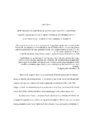
Show 67 More than ever, it is important to revisit age-old questions about rhetoric and subjectivity to account for the ways transnational corporations have superseded the human subject. As Michel Foucault has observed, subjectivity is always part of a historical formation that is always changing. And as he famously concluded in The Order of Things, … man is an invention of recent date. And one perhaps nearing its end. If those arrangements were to disappear as they appeared, if some event of which we can at the moment do no more than sense the possibility - without knowing either what its form will be or what it promises - were to cause them to crumble…then one can certainly wager that man would be erased, like a face drawn in sand at the edge of the sea. (Foucault, 1994, p. 387) Foucault's comments, notably consistent with many poststructural thinkers of his time, push the boundaries of discourse and capacities for human invention. Should we take Foucault seriously, and consider human subjectivity as a "recent invention" that may soon be "nearing its end," we may be able to rethink the very conditions of rhetoric and subjectivity to make way for a comprehensive understanding of how corporations function as rhetorical subjects. Rhetoric is all too often reduced to meaning rather than force. This has encouraged a proliferation of identity politics under the banner of "critiques of freedom and domination," and has done little to help us understand how nonhuman actors forcefully assemble networks that bring subjects into action. Corporations, after all, have no bodies and no souls, yet they have nonetheless emerged as the most powerful actors on the planet. As such, it is impossible to approach the question of corporate subjectivity from meaning-centered standpoints if we agree that corporations are both rhetorical and forceful. To address this gap in research, this chapter considers the question of corporate |