| OCR Text |
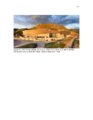
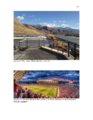
Show 155 to deal with this new corporate subject. As such, Legal Realists were successfully able to network with the train's new idea of progress and demonstrate that corporations, like people, are real and natural entities that were created by humans, but have demonstrated their capacity for "personality." The Court decided not to be left behind with its outdated grant theory that observed corporations as imaginative "creatures" of the state. It was quite obvious that they were much more than that given all of their industrial, communicative, and spatial achievements. After all, it was corporations, or more properly "joint-stock companies," that discovered the new world. Why should they not at least be considered equal to humans under the Fourteenth Amendment? States were no longer needed to ensure progress. The railways not only achieved constitutional equality, but they created it. This analysis has contributed to Condit and Lucaites' (1993) empirical study of equality during the Reconstruction Era by updating theoretical perspectives on the ideograph to account for nonhuman actors. I have argued for a broader, networked approach to ideographic criticism that accounts for the human and nonhuman forces that give it situational force. Arguing from the train's perspective, we have seen that corporations are indeed subjects that effectively demanded equality. The Supreme Court recognizes corporations as subjects, why should not rhetorical critics? The next chapter takes readers through a second assemblage where corporations have used their networks to secure rhetorical subjectivity: the community. In this chapter, I offer a close reading of three places of rhetoric that Rio Tinto uses to stabilize its subjectivity in Salt Lake City, UT. These places include the Natural History Museum of Utah, The Rio Tinto Soccer Stadium, and Daybreak, a community of suburban living. |