| OCR Text |
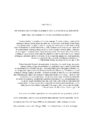
Show 14 to foresee the way rhetoric and argumentation actually work as forces.2 Even though corporate subjects such as Koch Industries are protected with the constitutional right to free speech, they still do not rely exclusively on reasonable arguments, logics of intentionality, or even the medium of voice to produce rhetoric and social change. While Koch is economically rational in that it makes decisions, which advance its economic interest, it is also nonhuman, multiple, and extra-rational in that it uses networks, not substantive arguments, to incite political social change. Yet, Koch Industries has emerged as a powerful political subject that influences major decisions at the polls and in everyday life with dispersed networks that constitute its subjective assemblage. Corporations thus demand a closer look. While we could bemoan the loss of a mythical critical-rational deliberative democracy or disparage corporations for infiltrating American politics and ushering in a plutocracic system of governance, such moral standpoints would side-step the detailed complexity of the networks that make corporations "go." Even The New York Times says that the "oft-repeated narrative of 2012," which goes something like "Citizens United unleashed a torrent of money from businesses and multimillionaires who run them" to create a "corporate takeover of American politics," oversimplifies matters; and in many regards, this moral platitude is "just plain wrong" (Bai, 2012, para.'s 3, 4). Regardless of rights and wrongs, reducing corporate political behavior to humanistic moral frameworks overlooks the failed marriage between rhetoric and reason. 2 This point will be developed in Chapter 2 and throughout the remainder of this dissertation. |