| OCR Text |
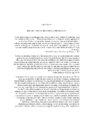
Show 150 group asserted corporations were "invisible, soulless, immortal" (p. 256). John Dewey once commented on this complicated rhetorical toggle over the idea of "personhood." Similar to Machen, he observed that the law can no longer be understood from formalist standpoints that assume imaginary divisions between law and other fields of discourse, such as philosophy and psychology. To him, the "doctrine of personality" was interfering with the emergence of a richer theoretical conversation about the ontological distinctions between humans and corporations. In his words: We often go on discussing problems in terms of old ideas when the solution of the problem depends on getting rid of the old ideas, and putting in their place concepts more in accord with the present state of ideas and knowledge. The root difficulty in present controversies about ‘natural' and associated bodies may be that while we oppose one to the other, or try to find some combining union of the two, what we really need to do is overahaul the doctrine of personality which underlies both of them. (Dewey, 1926, pp. 657-658) In this passage, Dewey indicates that the categorical divisions on the idea of personhood are limiting a more nuanced discussion about the philosophy of the law. In some ways, Dewey and other realists are hinting at the idea that language itself is an irreducible rhetorical force that cannot help itself from what Derrida (1989/2010) calls the necessary "slippage" of signifiers. Although Critical Legal Studies would not emerge until the second half of the 20th century, the realists were nonetheless testing the rhetorical motives of legal decision makers by challenging the assumption that the rule of law is a hermetically sealed realm of discourse. Neutrality, after all, is an impossible objective, and even lawyers trained with the technical skills to interpret law could not escape the force of the industrial networks that were assembling altogether new grids of intelligibilities. As Lucaites (1990) put it: "Judges did not discover the appropriate legal doctrine and then apply it to particular cases, but were actively involved in inventing ‘the |