| OCR Text |
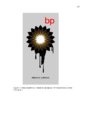
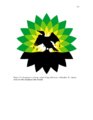
Show 268 language: the image. Logos are forces, intensities, and extensions that exist in singularity. To Latour (1984/1993), all actants are evental because their relations are utterly singular and happen only once, in one place, at one time. Since logos are evental, they can never be representations of something else. Although scholars such as Cara Finnegan (2001, 2005, 2006), Gallagher and Zagacki (2005), and Hariman and Lucaites (2007) assume that images hold representational meanings about history, race, violence, or political climates, achievements of unity, wholeness, and congruity are epistemological illusions that rarely, if ever, occur pragmatically (see Abel, 2007). While Hariman and Lucaites (2007) may be tempted to characterize logos as nonphotographic iconic images "that are widely recognized and remembered, are understood to be representations of historically significant events, activate strong emotional identification or response, and are reproduced across a range of media, genres, or topics" (Hariman & Lucaites, 2007, p. 27, emphasis added) it should be clear that logos are neither representations nor accidental. They are forces that rely on relational differences and repetitions within disparate assemblages that convey affect, and public relations (PR) teams are very careful about the emotions that they want their staged images to project. Hariman and Lucaities (2007) are right to say that images are political; yet, they are political because their meaning cannot be secured, not because they are representations of significant historical events that evoke privileged acts of democratic behavior. Logos are Argumentative Logos are also argumentative. As Delicath and DeLuca (2003) have argued, image events enhance public deliberation by creating social controversy, widening the |