| OCR Text |
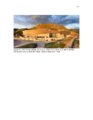
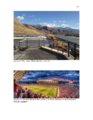
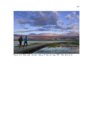
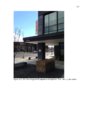
Show 179 city, but its exterior is a 42,000 sq. ft. copper façade (see Figure 4.1). The copper see Figureum's surrounding environment because it matches the landscape's desert colors. In a personal interview with the Executive Director and the Director of Development of the NHMU, the interviewees explained that the museum is "meant to be a metaphor for Utah's geology" (Personal Interview, NHMU, March, 2015). Actually, the façade is only 85% pure copper, and the other 15% is comprised of bronze and brass alloys mixed with concrete and enameled aluminum. These elements all "represen[t] a different rock structure" (Personal Interview, NHMU, March, 2015) native to Utah. The strata also mimic Utah's geology. The layers of aluminum are vertical rather than horizontal, like the nearby iconic peak Mount Olympus. There are even "fractures in the copper" that are "offset" like geologic seismic breaks. To the NHMU Executive Director, the museum is "really meant to be a geological lesson" (Personal Interview, NHMU, March, 2015). As Edward Rothstein (2012) of The New York Times commented, the architecture produces a "powerful impact" because while most natural history museums are found in "urban centers," the NHMU "is housed in the realm it surveys; it is at home" (para. 2). As a metaphor, the museum's façade visually represents Utah's natural history. It also educates visitors about the geologic composition of Utah. In addition to the vertical and fractured strata, the copper was intentionally not treated with any chemicals. The purpose of doing this is so that the copper would evolve with its surrounding landscape over time. This performs the science of evolution, which is one of the museum's principal values. On the museum's website, the museum invokes Darwin by stating that the "NHMU is an institution of science. As such, we accept the theory of evolution, which is the unifying concept of all biological sciences" (NHMU, 2015, Mission & Values). So |