| OCR Text |
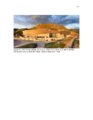
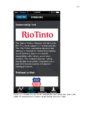
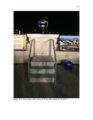
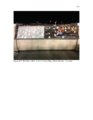
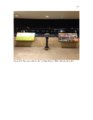
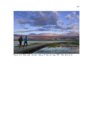
Show 186 stand out, with the natural geography of the Salt Lake landscape. Aaron Phillips (2014), however, argues that Rio Tinto's involvement with the NHMU is problematic because it elides the company's extraction of copper and paints the Bingham Canyon Mine as a "spectacle." However, this claim assumes that Rio Tinto is a dominant, rather than mundane, force at the NHMU and it somehow uses its sovereign authority to create a dominant ideology effect on museum visitors. This risks missing some of the more important, subliminal effects of Rio Tinto's alliance with the NHMU, such as how Rio Tinto uses natural history to establish community ethos. The museum, after all, is not about Rio Tinto. It is about scientific education. Rio Tinto's presence at this institution of science creates epistemic trust among the community because Rio Tinto is seen as a good neighbor. The network does not make the mine a spectacle; it makes it an integral part of natural history that is evolving alongside humans. Moreover, Phillips' ideological reading presumes an impossible hermeneutics of depth that necessitates moral judgment on the behalf of the human critic. Although this perspective allows Phillips to argue that the NHMU skews the area's geologic "deep time," it contradicts his conclusion that the NHMU is "arrogantly anthropocentric." If humanism is the problem with the NHMU's use of space, place, and time, then perhaps we should pay more careful attention to how Rio Tinto and the museum function on a "plane of immanence" (Deleuze and Guattari, 1980/1987) rather than a transcendental structure of verticality. This is one of the many advantages of ANT: it assumes the world is flat and accounts for nonhuman actors. A more complicated reading of the NHMU reveals that the museum does not celebrate humanism as much as it hails the corporate subjects mundanely articulated by |