
Contents | 21 of 368
















































Page 21


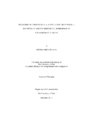
| Title | Networks of corporate subjectivity: Southern Pacific, Rio Tinto, BP and the rhetorical emergence of the corporate subject |
| Publication Type | dissertation |
| School or College | College of Humanities |
| Department | Communication |
| Author | Paliewicz, Nicholas Stephen |
| Date | 2015 |
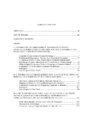
| Description | This dissertation maps networks that have enabled corporations to emerge as the most forceful argumentative and rhetorical subjects in our current communicative moment. Corporations are constitutional subjects within the legal arena, citizen-subjects in local and global communities, and visual subjects within scopic regimes, but they are rarely recognized as outright subjects. To address this gap in research, this dissertation adopts a networked orientation that assumes subjectivity is an assemblage rather than a singular, rational, or essential achievement and argues that corporate subjects exceed the grasp of humanism. To support this argument, I use Latour’s Actor-Network Theory (ANT) to map networks that give corporations subjective force in legal, communal, and visual assemblages. In Chapter 1, I discuss the theoretical problematic of the corporate personhood thesis since Citizens United v. Federal Election Commission (2010) and engage with academic conversations about the philosophical subject as understood by continental philosophers and rhetorical critics, and provide a literature of moral reproaches of corporate rhetoric. I also discuss the uses of ANT as a methodology, posit three research questions, and preview main points. Chapter 2 develops a networked orientation to rhetoric and discusses how Latour and Deleuze challenge traditional approaches to the subject, the text, and the audience. Chapter 3 discusses the rhetorical force of Santa Clara County v. Southern Pacific Railroad Co. (1886), which protected corporations with equal protection under the Fourteenth Amendment, and argues that the ideograph equality must be expanded to include corporate subjects. Chapter 4 traces the communal networks of Rio Tinto Kennecott in Salt Lake City, Utah at places of corporate community such as the Natural History Museum of Utah, the Rio Tinto Stadium, and Daybreak and argues that Rio Tinto is an example of how corporations can become citizen-subjects in local communities. Chapter 5 analyzes logos as visual condensations of the corporate subject and maps the rhetorical forces of bp’s logo before and after the Deepwater Horizon Oil Spill. Chapter 6 concludes this research with a discussion of implications for rhetoric, argumentation, and social change. The findings of this dissertation reveal that corporations are schizophrenic subjects that exceed humanism and surpass what Foucault calls “the age of man.†|
| Type | Text |
| Publisher | University of Utah |
| Subject | BP; Corporate Subject; Humanism; Latour; Rio Tinto; Southern Pacific |
| Dissertation Name | Doctor of Philosophy |
| Language | eng |
| Rights Management | ©Nicholas Stephen Paliewicz |
| Format | application/pdf |
| Format Medium | application/pdf |
| ARK | ark:/87278/s6z364qk |
| DOI | https://doi.org/doi:10.26053/0H-382Y-1MG0 |
| Setname | ir_etd |
| ID | 1356288 |
| Reference URL | https://collections.lib.utah.edu/ark:/87278/s6z364qk |
Page Metadata
| Title | Page 21 |
| Format | application/pdf |
| Setname | ir_etd |
| ID | 1356309 |
| OCR Text | Show |
| Reference URL | https://collections.lib.utah.edu/ark:/87278/s6z364qk/1356309 |