| OCR Text |
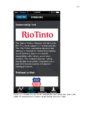
Show 272 relations that give objects personality rather than assuming the critic is a modernist subject capable of judging texts from sovereign perspectives, as Black and Wander would suggest. The corporate persona is thus the affective force corporate subjects create when building relations with audiences, which is not necessarily a moral character. The utility of the corporate persona is that it allows critics to analyze how corporate subjects achieve, and utilize, affective identities, or corporate temperaments, that build networks of relations. The root word of this heuristic, corporate persona, may risk connoting a human subject; however, my goal is to rearticulate this subjective implication by using it to understand the multiple networks of corporate actors. The concept confronts the fact that Western language is constructed on the metaphysical assumption that subjectivity is strictly a singular, rational, human affair, and this author is drawn to the concept persona because even though person- may imply a human subject, corporations nonetheless demonstrate that persona is better understood as an affective, rather than a rational achievement. Persona thus reveals slippage in Western language that privileges the rational, human subject even though affect, not rationality, is the primary function that gives subjects form, which disrupts the Cartesian cogito that assumes subjectivity is always a matter of thinking reasonably. The corporate persona is a play with all of this. But also, inventive substitutes, such as corporate-ona do not easily roll of the tongue. Logos give corporations personality. Why, after all, must humans be the only objects capable of this quality? Anyone with a pet knows that animals have personalities, but objects need not have flesh to have personality either. Mountains, deserts, books have personalities, and so do images. As Mitchell (2005) has famously argued in What Do |