| OCR Text |
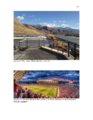
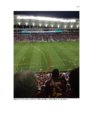
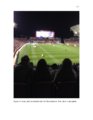
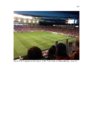
Show 91 that he chooses language as his object of deconstruction. As suggested earlier, signs are not events in themselves because they always have a supplement. In other words, they are not particular in the way Latour's objects are. While it is obvious that Derrida's (1998) point is that this loss of the transcendental signified produces a language system that cannot help but contradict itself, there are still worlds to be built beyond language because to Latour, language is just one of an incalculable number of actants that exert force in the world. So rather than just playing in the margins, Latour jumps out of the deconstructed text and jettisons its epistemological tools to reconstruct a world beyond language and its infinite chain of signifiers and logics of representation. If there is one lesson that we can hold on to from our post-Marxist, postmodern, poststructural years, which gained disciplinary traction in the 1990s, it is that the object is more important than ever. Arguably, expanding the object of rhetorical analysis beyond public address began with the image (Blair, 1996; DeLuca, 1999b; Finnegan, 2001; Finnegan & Kang, 2004; Gronbeck, 1995; Hariman & Lucaites, 2007;20 Mitchell, 2005; Vivian, 1999) and numerous critics have since demonstrated that museums (Dickinson, Blair, Ott, 2010; Dickinson, Ott, Aoki, 2005; Hasian & Wood, 2010), memorials (Blair, Jeppeson & Pucci, 1991) and even athletic events at stadiums (Butterworth, 2005, 2010; Butterworth & Moskal, 2009) are rhetorically performative. The time has come, however, to go even further by giving objects rhetorical agency by recognizing the rhetorical forces 20 Many of these critics have still tended to be a bit rational in their criticisms (Blair, 1996; Finnegan, 2001; Hariman and Lucaites, 2007) by arguably taking public address dogmas about the subject, the text, and the audience to the image, but these authors have nonetheless importantly contributed to the development of visual criticisms, which in itself is important because it has moved the study of rhetorical communication away from logocentric traditions that privilege the written word over the potentialities of the visual. |