| OCR Text |
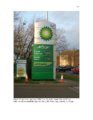
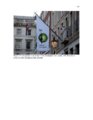
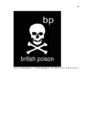
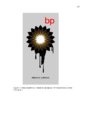
Show 280 that allows companies to "shape public opinion and win acceptance of corporate goals and ideologies" (p. 139) "while they continue to pollute" (p. 129). As Anne Landman (2010) wrote in her article titled "BP's ‘Beyond Petroleum' Campaign Losing its Sheen," the 2000 campaign "has always been ludicrous" (para. 1) because the company had never actually taken renewable energy seriously. Arguments against bp's marketing campaign have claimed that about the same time bp rebranded itself, it also spent $26.5 billion to purchase the Atlantic Richfield Company (ARCO) so that it could drill more oil while spending a mere $45 million to purchase solar energy company Solarex. "The company's hypocrisy and greenwashing have risen to the surface, and are spreading uncontrollably" (Landman, 2010, para. 1). To James Ridgeway (2010) of Mother Jones, before the Deepwater Horizon disaster, BP's green image was nothing more than a scam. While making miniscule investments in things like solar power, biofuels, and carbon fuel cells that backed its PR claims, BP continued to work relentlessly to expand its oil and gas operations. (para. 3) Ridgeway gives a laundry list of examples to support this claim: in 2004 bp employed a "massive manipulation" of the propane market and was forced to pay $303 million in criminal fines to financial victims; in 2005 one of its refineries in Texas killed 15 employees and injured 170 in a "devastating explosion" and was charged with a $50 million fine for its damages and another $87 million in 2009 for failing "to correct potential hazards"; in 2006, it was responsible for more than 260,000 gallons of crude oil spilling on the Arctic tundra from one of its pipelines by the Prudhoe Bay. This was "the worst onshore spill in Alaskan history" and BP ignored warnings about leaky, corroded pipelines and was fined with a $20 million penalty; and in 2007 BP violated numerous regulations to keep an offshore rig safe and secure, which led to a "near-blowout" in |