| OCR Text |
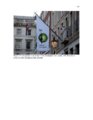
Show 257 not have bodies in the flesh, but they are still present. This is especially true within the visual assemblage. People visually encounter corporate subjects every day. Billboards, television advertisements, and magazines all produce relations with the visual corporate subject. Although the previous two chapters have implicitly assumed corporations are visually present, this dissertation has not yet analyzed how images, particularly logos, produce and sustain corporate subjectivity. This chapter fills this gap by both theorizing and pragmatically analyzing logos' subjective force. This assemblage begins with a reflection. While previous literature from Naomi Klein and Christine Harold26 has demonstrated logos are political sites of engagement, neither author asks how logos produce corporate subjects. This chapter reviews their work and argues that humanist orientations fail to understand how images work as irreducible, pragmatic actants that effectively produce structures of feeling about the corporate subject. The second section advances this argument by developing a networked approach to the logo. Specifically, this author argues that logos are image events, logos are argumentative, and logos produce affects that create "corporate personas." As a case study, the third section analyzes the rhetorical force of bp's rebranded logo, which since 2000 has depicted an environmentally friendly helios rather than a colorful shield. Although many argued that bp was greenwashing publics about the true meaning of its 26 While many others, such as Sharon Beder (2002a, 2002b), Toby Smith (2015), and George Cheney (1992) have studied corporate communication from visual, environmental, and organizational perspectives, this author focuses specifically on the arguments made by Klein and Harold because their work focuses exclusively on the logo as an elementary force of the corporation, and their work has had the most influence in the field of communication (Harold, 2007) and internationally (Klein, 2009). |