| OCR Text |
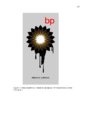
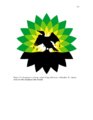
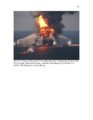
Show 269 public sphere, inciting "generative argument" (see Olson and Goodnight, 1994), jettisoning words, and delivering arguments to wide audiences while creating new lines for argumentative production. While Delicath and DeLuca (2003) have used this description to help understand how social movements can produce rhetorics of confrontation, we can also see that logos function in a very similar way, albeit with very different argumentative purposes. Logos can create social controversy when networked with destructive relations, even if this relationship is accidental. In the case of the Gulf of Mexico Oil Spill, bp's logo was an object of social protest due to its association with destructive environmental activities. The logo became a contested object that incited argumentative deliberation about corporate actions and consequences in environmental contexts, particularly in the Gulf of Mexico. Logos can also create generative arguments when linked with branded forms of deliberation or civil disobedience. When BP became bp, it changed its logo from a shield to a pro-environmental helios and made an argument that its subjectivity was now networked with practices of environmental sustainability. There were data to support this: it was now funding photovoltaic cells for solar energy, it was investing in natural gas - which was articulated as a cleaner alternative to oil - and supported various environmental initiatives. When it unveiled this new logo in 2000, bp said, "We are not an oil company. 40% of our hydrocarbon production comes from natural gas. We are aware the world wants less carbon-intensive fuels. What we want to do is create options" (Macalister, 2000, para. 7). These elements of argument were then challenged by groups contending that bp was misleading publics about the truth of the matter: bp was still mostly invested in dirty fossil fuels. |