| OCR Text |
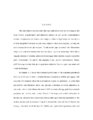
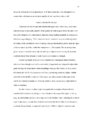
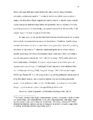
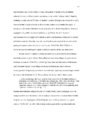
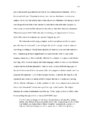
Show 81 however, is the point that subjectivity is not limited to humans. How arrogant it is to assume that only humans are subjects capable of exerting force in the world! Latour's Irreducible Subject Actors/actants are brought into relation through events, which only occur once and are always contextually specific. Putting them in relation gives them life, and when they form alliances with other actants, then they create endless possibilities of networks that are always changing. This involves a constant process of mediation that negotiates the reality of the assembled forces. Meaning is always transformed, and as such, the input of forces cannot possibly predict the interpretation of its outputs. This is an important point because it reminds critics that the stability of objects is a temporary illusion that overlooks the prolific amount of work required to maintain its strength. Latour's principle of irreduction is central to his conceptualization of actants, which we have already observed is a networked, fragmented, and dispersed subject that gains ontological momentum within assemblages that give them force. As discussed in the second half of The Pasteurization of France, Latour argues that no object is either reducible or irreducible to another. This means that critics cannot isolate parts of the world in an attempt to purify its forces and create a broad intermediary explanation of what is occurring. In other words, to reduce objects to a particular conceptual framework is to consider their existence according to a more fundamental, or purified, aspect of reality (e.g., an Aristotelian substance or a Hegelian Geist). In many ways, reducing criticisms to a particular theory or method is a horrible violence to the objects themselves because it overlooks the performative repertoires (see Taylor, 2003) of objects themselves and |