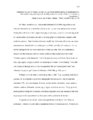
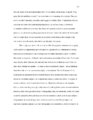
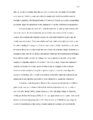
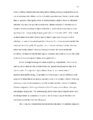
| OCR Text |
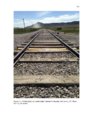
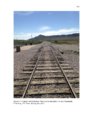
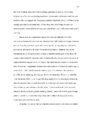
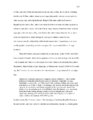
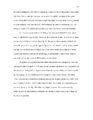
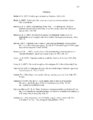
Show 44 Conclusion: A Travel Guide to Corporate Assemblages The following five chapters analyze the productivity of relational objects that have given rise to the corporate subject. Chapter 2 discusses the uses of Bruno Latour's ANT for understanding how corporations work. It argues that corporations have ushered in a new age of communication where humans are no longer the most forceful rhetorical actors, and talks about theoretical and methodological advantages of a networked orientation to rhetoric and subjectivity. Following Latour, subjectivity is a relational phenomenon that only makes sense from an immanent perspective that flattens out the world. As such, Chapter 2 talks explicitly about the implications of this to the concept of the corporate subject and rhetoric, generally speaking. Specifically, I identify how a networked orientation to rhetoric changes the subject, the text, and the audience. Chapter 3 begins to analyze the corporate subject within the same assemblage mentioned in this introductory chapter: the U.S. Supreme Court. As such, this chapter analyzes the legal assemblage that has produced corporate subjectivity in the eyes of the Supreme Court. Primarily, this chapter will detail how the 1886 Supreme Court decision Santa Clara County v. Southern Railroad Co. put numerous legal, social, and political forces in motion. This case was one of the first Foucauldian events that triggered a new historical regime dominated by corporate subjects and paved the way for more recent decisions that have ruled corporations are protected under the right to free speech and the freedom of religion. Importantly, this chapter demonstrates that corporate subjectivity did not always have unlimited charters to engage in economic affairs without constraint. Before this decision, and earlier in the 19th century, corporate agency was highly restricted. Indeed, corporations had many legal, social, and cultural restrictions from anti- |