| OCR Text |
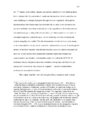
Show 34 Dunlap and Freeman (2008) have also problematized strategies industries use to stymie important political conclusions concerning environmental policies. The significance of environmental impacts such as global warming have led Marlia Banning (2009) to defend an "unabashedly normative" position that "assumes there is a social imperative to which public discourse should be accountable to ethical warrants to which scholarship must answer" (p. 287). To her, "the vexed case of climate change" is enough to convince her that rhetoricians should give up on poststructural approaches to rhetoric and return to Platonic guards of Truth and Lies because global warming apparently reduces criticism to a simple a matter of fact checking. This would basically require the rhetorical critic to become a sovereign, objective reporter who distinguishes fact from opinion, ethical from nonethical, and truth from lies in an effort to restore Enlightenment traditions that have had no problem commanding how communication ought to occur in public spheres and deliberative democracies (e.g., Goodnight, 1982; Gross, 2012; Habermas, 1984, 1991; see DeLuca & Peeples, 2002 for more information why the dream of the public sphere has failed). Clearly, Banning has little faith in poststructuralism. Rather than calling it quits, this dissertation argues that critics should work harder to understand the networks of industrial discourse within their intricate webs of rhetoric, culture, and power. To be more precise, although some believe that corporations intentionally dupe publics with false consciousness and "pseudo-debates" (Banning, 2009; Bell & York, 2010; Ceccarelli, 2011; Cloud, 1994; Coleman, 1995; Oreskes & Conway, 2010; Stauber & Rampton, 2002), this dissertation hopes to demonstrate that corporate subjects are fragmented, dispersed, networked subjects that do not lead publics away from a more |