| OCR Text |
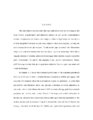
Show 114 in history, initiating an entire era of corporate equalities under the law. As Carl Mayer (1990) pointed out, Santa Clara paved the way for a laundry list of constitutional protections that he calls the "Corporate Bill of Rights." Today, these rights, and their relative Supreme Court decisions are as follows: • First Amendment: political (First National Bank of Boston v. Bellotti, 1978), commercial (Central Hudson Gas v. Public Service Commission, 1980), and negative free speech (Pacific Gas & Elec. Co. v. Public Utilities Comm'n, 1986) • Fourth Amendment: safety from unreasonable searches (Hale v. Henkel, 1906), • Fifth Amendment: double jeopardy (United States v. Martin Linen Supply Co., 1977), due process (Noble v. Union River Logging R. Co., 1893), and eminent domain under the takings clause (Pennsylvania Coal Co. v. Mahon, 1922) • Sixth Amendment: right to jury trial in criminal case (Armour Packing Co. v. United States, 1908) • Seventh Amendment: right to jury trial in civil case (Ross v. Bernhard, 1970) and allowances to trial by jury (Army Packing Co. v. United States, 1908; Ross v. Bernhard, 1970) This shocking list of constitutional rights clearly indicates that the Supreme Court of the United States (SCOTUS), the highest court in land, has for quite some time recognized that corporations are subjects under the U.S. Constitution. In turn, many have bemoaned the loss of our democratic ideals that have appeared to come with this legal history. Ted Nace (2005), for instance, argues that "corporate personhood" has created a new age of corporate supremacy that takes the form of Louis Althusser's (2006) Institutional State Apparatus (ISA), since corporations are active themselves in the production and |