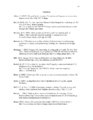
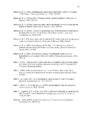
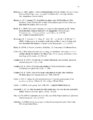
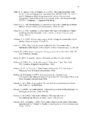
| OCR Text |
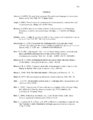
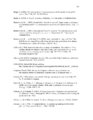
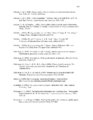
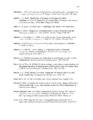
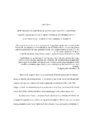
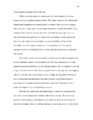
Show 27 McKerrow (1989),4 and DeLuca (1999a) who have drawn from postmodern and poststructural assumptions5 to approach subjectivity as a fragment, a relation of power, and a discursive articulation. This set in motion a tremendous body of work that has explored, critiqued, and evaluated the problems and possibilities of the rhetorical subject.6 Although not all of this research explicitly identifies with work done by Charland, McKerrow, and McGee, this substantial corpus of literature nonetheless demonstrates that many rhetorical scholars have committed work to thinking through rhetorical productions of subjectivity in the last two and a half decades. While terrific theoretical work has been done in the area of the rhetorical subject, 4 Many academics have rightfully argued that McKerrow (1989) misreads Foucault (Biesecker, 1992a, pp. 352-353) and overlooks his own modernist assumptions by assuming critics are capable of unveiling dynamics of power from privileged, autonomous positions (DeLuca, 1999a; Hariman, 1991; Ono & Sloop, 1992). As DeLuca (1999a) argues, "McKerrow's vestiges of modernism lead to inconsistent deployments of postmodern theories that hamper critical rhetoric" (p. 149) and his "programmic critical rhetoric" sets forth a "project of demystification [that] posits the critical rhetor as a modern, rational subject observing the social scene form a privileged stance and enlightening the masses mired in false consciousness…far from displacing the modern critic seems to have resurrected just such a critic…" (DeLuca, 1999a, p. 150). 5 There are key differences between postmodern and poststructural currents in research, but they are not worth teasing out here. 6 Much of this research has focused on the problematic rhetorical effects of narrowly defined subject positions. Interested readers may want to consider research on gendered subjects (Biesecker, 1992b, 1992c; Blair, Brown & Baxter, 1994; Griffin, 1994; Sloop, 2004), including important debates between Karlyn Kohrs Campbell (1973, 1983, 1986) and Barbara Biesecker (1992b, 1992c, 1993); transgendered subjects (Sloop, 2004); queer subjects (Morris, 1998; Morris & Sloop, 2006; Sloop, 2000; Rand, 2013; West, 2013); racialized and postcolonial subjects (Cloud, 1994; Hasian & Delgado, 1998; Ono & Sloop, 1995; Ono & Sloop, 2002; Shome, 1996; Sloop & Ono, 1997); hegemonic subjects (Cloud, 1996; Condit, 1993; Zompetti, 1997); Foucauldian subjects (Biesecker, 1992a; Herzberg, 1991; Phillips, 1996, 2002); melancholic citizen-subjects (Biesecker, 2007); post World War II nostalgic (Hasian, 2001), victimized (Eherenhaus, 2001), and virtuous citizen-subjects (Biesecker, 2002); and nonhuman, animalistic rhetorical subjects (Davis, 2011; Hawhee, 2011; Kennedy, 1992; Muckelbauer, 2011; Rogers, 1998; Seegert, 2014a, 2014b; Sowards, 2006). |