| OCR Text |
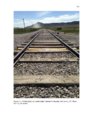
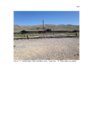
Show 152 Monopolies were beginning to form, and the pace of expansive divisions between large and small industrial companies was stunning. For instance, the majority of the manufacturing companies in the 1880s, which were considered small in size, had an approximate net worth of $2 million. The few "very large" corporations earned between $5 million and $10 million. The ten largest railroads, on the other hand, at least $100 million net worth, and the largest of them all - the Pennsylvania Railroad - had more than $200 million (Horwitz, 1992, p. 95). These economic inequalities paved the way for greater constitutional equalities in Santa Clara and its companion cases. With the railroad came not only progress, but an entirely new dimension of space and time that pummeled through the Wild West. All things considered, this chapter has argued that corporations achieved equality under the Fourteenth Amendment of the United States Constitution because they acquired networks in political, economic, and legal assemblages that allowed them to bolster their case for constitutional recognition. This chapter began with the argument that the ideograph is an irreducible force that is susceptible to our critical modes of translation and that it is an inscription, not a "container of meaning." Although ideographs may still have the capacity to "control publics," as McGee argued, they do so in utter singularity, and not through historical momentum. Said otherwise, the ideograph is itself an actant that attains force only through the networks that it is connected to. In the case of Santa Clara, we can see that corporations achieved equal protection because they had industrial progress as an ally to their network. Industrialism, particularly "industrial time," was a national phenomena that eventually penetrated the courts. Next, this chapter discussed the history of corporate equality and inequality to |