| OCR Text |
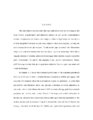
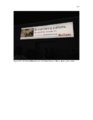
Show 78 Guinea. Rio Tinto's source-point networks are huge. They require an inconceivable number of assemblages and countless actants to maintain Rio Tinto's subjectivity. The scale of this network is indicative of the scale of our global economy, which requires bottomless demands for natural resources to produce everyday technological commodities. Indeed, the pervasiveness of capitalism has produced a new discursive apparatus that has enabled corporate subjectivity to eclipse human subjectivity, and Rio Tinto plays no small part in maintaining the order of this economic system. Where do the traces of this industrial subject take us? One of the earliest emergences of Rio Tinto can be traced back to a small region of southern Spain called Huelva, Andalusia in the 1880s. It was here, on the Rio Tinto, or the "red river" where British and German interests first purchased old royal mines under the first chairman of the Rio Tinto Company (eventually renamed, Rio Tinto Zinc), Hugh Matheson. Even though the mine was eventually sold back to new Spanish owners in 1954, Rio Tinto kept one-third of the interests and moved on to become an international "mining and polluting giant" (Martinez-Alier, 2001, p. 156). While it is easy to point to the mines as the "origin" of corporate mining activity, it is equally important to map the ecological forces that created the very conditions for mining (see Davis et al., 2011). The Rio Tinto (river), for instance, is said to be the birthplace of the European Copper Age and the Bronze Age before Rio Tinto Zinc ever began to create its corporate alliances. This river enabled an entire epoch of European industrialism that spawned new webs of relations with environmental and economic networks. This river served as a medium for transportation to access the deposits, an |