| OCR Text |
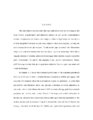
Show 115 reproduction of social relations. To Nace, the corporation seems on "an inexorable course toward permeating every aspect of human life, not just the traditional economic spheres but increasingly…public spheres" (pp. 226-227). He compares corporations to gangs, which use their concerted power as leverage to "disable democracy" and sustain social inequalities. In Unequal Protection: How Corporations Became "People" - And How You Can Fight Back, Thom Hartmann (2010) outlines how corporations have seized Constitutional laws intended for human subjects, which has led to what Jürgen Habermas (1984) would call a legitimation crisis: In fact, to this day there has been no Supreme Court ruling that explicitly explains why a corporation - with its ability to continue operating forever, its being merely a legal agreement that can't be put in jail and doesn't need fresh water to drink or air to breathe - should be granted the same constitutional rights our Founders fought for, died for, and granted to the very mortal human beings who are citizens of the United States, to protect them against the perils of imprisonment and suppression they had experienced under a despot king. (Hartmann, 2010, pp. 1718) Still others, such as Naomi Klein (2007, 2009, 2010, 2014) and Sharon Beder (2002, 2006) basically characterize corporations as leviathans determined to defeat any resemblance of democracy whenever the opportunity arises. Stanley Deetz (1992) even argues that the corporation has "eclipsed the state, family, residential community, and moral community" (p. 2), which led Nneka Logan (2013) to infer that perhaps we are now in the dawn of an "institutional corporate apparatus" (p. 12). Without disputing these arguments, I hope to demonstrate that corporations have effectively fought for equality under the SCOTUS as networked rhetorical actors. Even though scholars may disagree with the ethical implications of these effects, the bedazzling success of corporate equalities still merits the attention of rhetorical critics. |