| OCR Text |
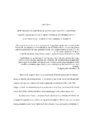
Show 4 Fourteenth Amendment. In 1976, in Buckley v. Valeo, the Court ruled that Congress cannot ban independent contributions to political election campaigns. And in Austin v. Michigan Chamber of Congress, the Supreme Court struck down the Michigan Campaign Finance Act, which attempted to restrict corporate contributions to political campaigns, on the grounds that corporations are protected under both the First and Fourteenth Amendments. Citizens United v. Federal Election Commission did not come from thin air, and for a number of years, academics such as Ron Greene (2007) have argued that politics is now simply a matter of "Money/Speech," where "political rhetoric" is widely understood as "a financial process" (p. 329) that compels advocacy. Just recently, in McCutcheon v. Federal Election Commission (2014), the Court ruled that individuals have more liberty to directly fund candidates by lifting the $48,600 cap on overall contributions to candidates in primary and general elections. While Justice Stephen Breyer said, in dissent, that this decision increased potential contributions to "the number of infinity" (Liptak, 2014, para. 8), Chief Justice John Roberts said that money expresses constitutional freedoms to deliver political speech without government restraints. "Money in politics may at times seem repugnant to some," he noted, "but so, too, does much of what the First Amendment vigorously protects. If the First Amendment protects flag burning, funeral protests and Nazi parades - despite the profound offense such spectacles cause - it surely protects political campaign speech despite popular opposition" (Liptak, 2014, para. 16). Some have even argued that corporate free speech is key to democratic behavior. After all, without freedom of speech from government interference, corporations such as The New York Times, The Economist, and MSNBC would not be allowed to report the |