| OCR Text |
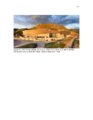
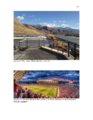
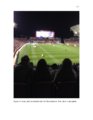
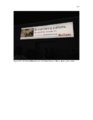
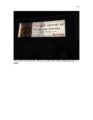
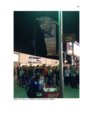
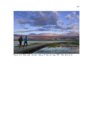
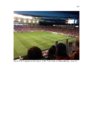
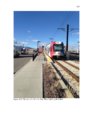
Show 193 ideological discourses that interpellate, or hail them. This means that subjects are neither singular nor transcendental because subjects can belong to various discursive apparatuses at once. Following this logic allows critics to infer that NHMU visitors are constituted by the cultural aesthetic of corporate community that is interactive and scientifically oriented. It is a hybridized discourse that blends public education with science, evolution, nature, culture, and of course, corporate interests. Visitors are constituted by this complicated web of citizenship and become part of Rio Tinto's network. Corporate community is thus a structure of feeling, an affect, a sensus communitatis centered on sensational forces rather than logical appeals. This is a rhetorical force that gives Rio Tinto epistemic authority on the natural history of Utah. The Rio Tinto Soccer Stadium Our next stop is the Rio Tinto Stadium. To get here, all we have to do is jump back on Trax, take the red line to downtown, and transfer to the blue line, which will take us to the heart of the Salt Lake Valley in Sandy, UT. This is where the Rio Tinto Stadium is located. The stadium was completed in 2008, and it is home to the Major League Soccer (MLS) team, Real Salt Lake (RSL). The stadium is an architectural wonder. It is an open venue with two field-length Teflon-coated fiberglass canopies that protect fans from the harsh sun during the summertime. Though I have been informed that it is comparably smaller than other MLS stadiums, it comfortably seats 20,000 spectators for Major League Soccer games and 25,000 for music concerts (see Figure 4.6). The average attendance for Real Salt Lake Games is 20,351, which is an average of 100.68% capacity, making it the sixth most attended soccer stadium in the country (Phillips, 2015). The construction cost of the stadium was approximately $110 million, and Rio Tinto annually |