| OCR Text |
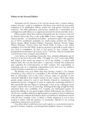
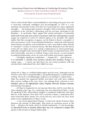
Show Anonymous Praise for Rationality and the Structure of the Self, Volume II: A Kantian Conception 646 the self. Hume's self is propelled by desires, with reason just helping out to calculate how to satisfy the most desires. For Kant, reason is not merely an instrument, but a faculty that itself produces content, something that can direct action from its own principles. [Piper]'s novel move in the project of appealing to Kant to provide justification for a non-desire based account of human action and so morality is to take Kant seriously when he says that it is one and the same reason that creates theories of the world and directs moral behavior. So she looks to the theory of cognition in the Critique of Pure Reason … for clues about his picture of the self in moral life. This approach has considerable plausibility because of the distinctive shape of Kant's theory knowledge. … The crucial point for [Piper]'s purposes is that, if a would-be cognizer's encounters with the world are scatty or if he lacks a concept of himself as an on-going acquirer of information, then he will lose or perhaps never develop any sense of self. … Neither Nagel nor Korsgaard looked to Kant's own theories of cognition to buttress his rationalist approach to ethics …. O'Neill is closer to [Piper] in making some use of the views of [the first Critique], but she does not develop this line in great detail or in anything like the same way it is developed in RSS2. On this basis, I believe the project to be both important and original. … The writing and organization are excellent. The central theoretical apparatus of KSS2 is given in Chapter II, where AP introduces the notions of horizontal and vertical consistency. These are important, because she will argue that consistency is necessary to having a sufficient intellectual grasp on the world to be capable of agency. This result then has two crucial implications. The first is that intellectual selfpreservation and so consistency are necessary conditions to being an agent at all. So rather than reason being a potential source of action on a par with or competing with desire, an active reason that presses constantly for consistency is revealed as a necessary condition for desire or intention themselves (thus disposing of [the desire theory of action]). The second implication is that morality arises from the effort of reason to be consistent and so to preserve the life of the self. I'm sympathetic to [Piper]'s claim that it makes sense to talk about subsentential consistency, so that the objects of one's attitudes must be understood consistently (that is, it is not just that one's attitudes or attributions to those objects must be understood consistently). …[S]he has a plausible view about Kant's understanding of representations and judgment. …[H]er approach to the intentionality of preferences seems plausible. … [S]he makes good use of McClennen's work on resolute choice to argue that any genuinely intentional action presupposes consistency. … [She] does a good job at characterizing how we might think about reason causing action. © Adrian Piper Research Archive Foundation Berlin |