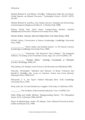
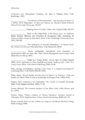
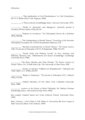
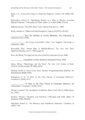
| OCR Text |
Show Chapter I. General Introduction to the Project: The Enterprise of Socratic Metaethics 36 Morgenstern, Allais, Ramsey, Savage, and others do not avoid its intrinsic structural defects. I conclude that the structural defects of the Humean conception of the self more generally can be avoided only by resituating it as a special case within the more comprehensive, Kantian conception of the self discussed in Volume II. By scrutinizing the problems and flaws inherent in the Humean conception itself, Chapters II through IV prepare the ground for the criticisms in Chapters V through XIV, of some of the myriad ways in which this conception of the self has been pressed into service to provide formally sophisticated and scientifically reliable foundations for a wide variety of twentieth century normative moral theories. I begin this survey in Chapter V, by dislodging my subsequent examination of these theories from the straitjacket into which Anscombe's influential distinction between consequentialist and deontological theories has forced them. I argue that this distinction obscures rather than illuminates the complex structure of a fully developed normative theory; and that so-called consequentialist moral theories are in fact merely Humean exemplars in disguise. I reject Anscombe's obfuscating distinction in order to focus more sharply, in the rest of Volume I, on the actual, detailed structure and content of some of those leading late twentieth century moral theories that - regardless of their stated allegiance - depend on Humean metaethics, without the benefit of Kantian presuppositions. All, whether they identify themselves as Humeans, Kantians, New Kantians, Anti-Rationalists or Noncognitivists, make use of the Humean models of motivation and rationality as foundational justificatory premises for their normative moral theories. I argue that all such theories founder on the inadequacy of these models to the task. 7.2.2. Three Metaethical Problems Late twentieth century normative moral theories that invoke the Humean conception of the self as a justificatory foundation thereby engender three fundamental metaethical problems that each one of these theories then tries to solve, and that are insoluble within its own confines: (1) First there is the problem of moral motivation: Can moral considerations alone move us to act in others' interests? The belief-desire model of motivation implies that they cannot; for that model stipulates that all action is motivated by the pursuit of desire-satisfaction, and only desires have causal influence on action. This means that rational appeals, argument and dialogue by themselves are in theory insufficient to reform, change minds, create desires, or inspire action. Hence on the Humean conception of the self, specifically philosophical dialogue alone is equally impotent to reform the culpable. Chapter VI defends this conclusion, as well as this formulation of the problem of moral motivation, against Humeans who declare that there is no such problem because the belief-desire model of motivation is compatible © Adrian Piper Research Archive Foundation Berlin |