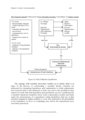
| OCR Text |
Show Rationality and the Structure of the Self, Volume I: The Humean Conception 323 the moon should not be definitive of the "good, fulfilling, and defensible life" for me. And however ready you may be to accept my chosen way of life, surely you are justified in entertaining further doubts about its rationality. If Watson's rational values are truly rational, then we should be able to give persuasive reasons for holding them, and for according them precedence over the promptings of desire. That is, we should have some reason to believe that we are capable of evaluating ourselves correctly. Otherwise, Watson succeeds only in shifting the infinite regress from appetitive desires to "rational" values, rather than terminating it. Watson not only does not furnish such criteria. In fact, he cannot. For in fashioning a bipartite conception of a self that includes two independent sources of motivation, he leaves open the psychological question of which source is in fact authoritative for any particular self, and begs the philosophical question of which source should be. He is concerned to emphasize that the reason-appetite distinction does not commit us to any necessary or inevitable split between reason and desire, since, for example, we may value certain activities such as eating or sex precisely because of the desires they satisfy. But the distinction does commit us to the possibility of such a split. If there are sources of motivation independent of the agent's values, then it is possible that sometimes he is motivated to do things he does not deem 14 worth doing. However, even this much understates the case. For if there are two, mutually independent sources of motivation within the self, then surely it must be an open question with which source the agent identifies on any particular occasion, hence which constitutes her self-conception or (in Watson's 15 terminology) "standpoint." Watson seems to take it for granted that an agent 14 Ibid., page 213. 15 Wright Neely makes this point in anticipation of Watson's analysis (op. cit. Note 1, 42). Watson does not use the term "standpoint" as I do the term "self-conception." He means "the point of view from which one judges the world." (216) He doubts the validity of the Humean conception of the self as scrutinizing and evaluating the worth of its first-order desires. Rather, he believes that [agents need not usually] ask themselves which of their desires they want to be effective in action; they ask themselves which course of action is most worth pursuing. The initial practical question is about courses of action and not about themselves. But this seems part of a general plan to throw out the baby with the bathwater. For in denying that we evaluate our first-order desires from the perspective of second-order ones, he seems to want to deny as well that we act self-reflectively at all. But surely one consideration that favors any action we deem worth performing is that it is consistent with actions performed by the kind of person we aspire to be. The "point of view from © Adrian Piper Research Archive Foundation Berlin |