| OCR Text |
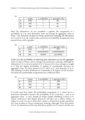
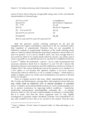
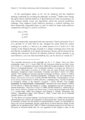
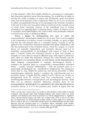
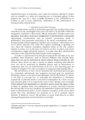
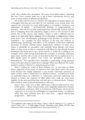
Show Chapter IV. The Utility-Maximizing Model of Rationality: Formal Interpretations 144 Notice that we could run the same argument on weight, keeping probability fixed and certain: (4) F G H weight 2 .000000000001 6 x probability 1 1 1 = aggregate value 2 .000000000001 6 F G weight 2 0 x probability 1 1 = aggregate value 2 0 H 6 1 6 (5) Is G in (5) a live option or not? Even if Inez is one hundred percent certain that G, which is worthless to her, will obtain if she so chooses, its utter lack of value in her eyes does not merely reduce it to a lowest-ranked option. Its zero aggregate value decisively rules it out as an option for her. The difference between a state of affairs that is a lowest-ranked option and one that is not an option at all is that the latter lacks any discernible qualities that might persuade the agent to choose it, even in the worst-case scenario. If G's zero aggregate value rules it out as one of Inez's options in (5), then it is hard to see why she should count it among her options in (4) either, given its negligible aggregate value - and so indiscernible redeeming qualities - there. In both cases, aggregate value exists along an asymptotic linear continuum that shades off imperceptibly to zero at its lower limit. Here, too, if the agent's weighting of option O is small enough, it will be imperceptible. O's aggregate value will similarly decline toward zero and hence imperceptibility regardless of its probability. As O's aggregate value declines to imperceptibility, the significance of its aggregate value again correspondingly declines towards negligibility. Both the contra-G and the pro-G arguments, both about probability and 16 about weight, generate sorites paradoxes: 16 For a lucid analysis of the sorites paradox, see Stephen Schiffer, The Things We Mean (New York: Oxford University Press, 2003), Chapter 9: "Vagueness and Indeterminacy." © Adrian Piper Research Archive Foundation Berlin |