| OCR Text |
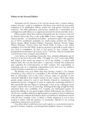
Show Rationality and the Structure of the Self, Volume I: The Humean Conception 265 subjectively contingent, and the determination of such a will in accordance with objective laws is necessitation.3 Here Kant acknowledges the force of the externalist's claim, that reasons may have objective validity without our being moved to act on them; but also suggests that our recognition of their objective rational validity may compel or necessitate us to act on them despite our resistance. When our actions fail to accord with what reason requires, it is because "certain drives" interfere. We will see that something like this line of reasoning is attractive to Nagel, too. Nagel begins by describing two possible solutions to the dilemma. The first is to reject and replace the belief-desire model of motivation. That is the solution I choose in Volume II of this discussion. The second is to retain the belief-desire model of motivation, but find a basis for distinguishing those desires that are susceptible to rational assessment from those which are merely arbitrary inclinations. This is the alternative Nagel chooses. He describes his task as follows: I shall propose that the basis of ethics in human motivation is something other than desire; but this factor will itself enable us to criticize certain desires as contrary to practical reason (5). It is important to get clear about what Nagel is and is not saying in this passage. He is not saying that moral motivation is something other than desire. He is saying that the basis of moral motivation is something other than desire. This basis, whatever it turns out to be, can then be used to criticize desires as contrary to or in conformity with reason. But the first clause does not commit Nagel to repudiating the belief-desire model of motivation as he renders it ((a), 5), and the second clause suggests that he embraces it. Thus it seems that this basis of ethics will not provide an alternative motivational model for moral action. It will instead propose a new criterion for distinguishing those desires which are rational from those which are not. This introductory statement of Nagel's project does not portend a rejection of the Humean model, but rather an improvement on it. What does Nagel mean by a "basis of ethics" such that it might have such a critical and rational role in evaluating desires? He characterizes it as a set of "motivational requirements on which to base ethical requirements" (5); and as "susceptible to metaphysical investigation", as carrying "some kind of necessity"(6). He also insists that the hold of these motivational requirements on us must be deep, and essentially tied to the ethical principles themselves Immanuel Kant, Grundlegung zur Metaphysik der Sitten Herausg. von Karl Vorländer (Hamburg: Felix Meiner Verlag, 1965) Ac. 412-413. Since I now comment on what I believe Kant actually to have said, rather than - as in Chapters I and V - on what other philosophers have gleaned from (to my mind faulty) translations of Kant's writings, I now work directly from the German original and offer my own translations. Henceforth page references to the Academy Edition of this work are parenthecized in the text, preceded by "G". 3 © Adrian Piper Research Archive Foundation Berlin |