| OCR Text |
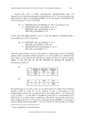
Show Chapter IV. The Utility-Maximizing Model of Rationality: Formal Interpretations 160 So the quasilogical status of (T) can be retained, and the empirical 30 findings respected, by invoking the principle of charity. Rather than charge the agent whose selection behavior is described by (C) with inconsistency, we may instead simply revise our hypothesis about her present preference rankings. Thus suppose Cyril's behavior produces a cyclical ordering over three temporally sequential trials, in each of which he must make pairwise comparisons among F, G, and H, as follows: (Ct) t1: F>G t2: G>H t3: H>F Call these temporally sequential trials time-dependent. That Cyril prefers H to F at t3 permits us to infer that he has changed his mind about his earlier rankings at t1 and t2, i.e. that at t3, he rather prefers H to G and G to F. The vacuity of the Ramsey-Savage concept of a simple ordering arises from the fact that the transitivity of an agent's preferences always can be preserved by making this inference. Because all selection behavior always permits it, no 31 such behavior, not even that described by (C), can be shown to violate (T). 30 For extended discussion of this principle, see W. V. O. Quine, Word and Object (Cambridge, Mass.: M. I. T. Press, 1960), 59, 69; Ontological Relativity and Other Essays (New York, N. Y. Columbia University Press, 1969), 46; Donald Davidson, "On the Very Idea of a Conceptual Scheme," APA Presidential Address, Proceedings and Addresses of the American Philosophical Association 47 (1974). Also see Amos Tversky and Daniel Kahneman, "Judgment Under Uncertainty: Heuristics and Biases," Science 185 (1974), 1124-31; ""The Framing of Decisions and the Psychology of Choice," Science 211 (1981), 453-458; James G. March, "Bounded Rationality, Ambiguity, and the Engineering of Choice," Bell Journal of Economics 9 (1978), 587-608; Elliot Sober, "Psychologism," Journal for the Theory of Social Behavior 8 (1978), 165-191; L. Jonathan Cohen, "On the Psychology of Prediction: Whose is the Fallacy?" Cognition 7 (1979), 385-407; "Can Human Irrationality be Experimentally Demonstrated?" Behavioral and Brain Sciences 4 (1981), 317-331; Steven P. Stitch and Richard E. Nisbett, "Justification and the Psychology of Human Reasoning," Philosophy of Science 47 (l980), 188-202; Richard E. Nisbett and Lee Ross, Human Inference: Strategies and Shortcomings of Social Judgment (Englewood Cliffs, N. J. Prentice-Hall, 1980); Paul Thagard and Richard E. Nisbett, "Rationality and Charity," unpublished paper, 1981; Steven P. Stich, "Could Man be an Irrational Animal?" Synthese 64, 1 (1985). 31 In "The Theory of Decision-Making," (Psychological Bulletin 51, 4 (1954), Ward Edwards acknowledges and criticizes this argument on the grounds that "unless the assumption of constancy of tastes over the period of experimentation is made, no experiments on choice can ever be meaningful, and the whole theory of choice becomes empty. So this quibble can be rejected at once" (405). !!? These concluding sentences do not follow as obviously as Edwards thinks they do. My argument in this chapter is that, on the © Adrian Piper Research Archive Foundation Berlin |