| OCR Text |
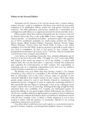
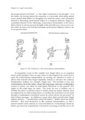
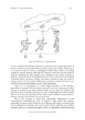
Show Chapter I. General Introduction to the Project: The Enterprise of Socratic Metaethics 16 The philosophical style we may describe as the Bull probably originates in the exhilarating discovery of esoteric knowledge that induction into any field of specialization brings. This tactic works best on students, or on colleagues who work in a different subspecialty than oneself. Like the Bulldozer and the Bullies, the Bull discourages questioning or dialogue, and silence dissent. The Bull may spew forth, with a great and rapid show of bombast, a torrent of technical or esoteric terminology, or inflated fivesyllable abstractions. Or she may issue - again with no apology and much pomp - several incoherent, inconsistent, or mutually irrelevant assertions, and appear surprised at any suggestion of paradox. Or she may answer your pointed questions with a barrage of vague philosophical generalities that seem not to engage the issues at all. And the Bull may borrow some tactics from the Bully, in suggesting that any failure to grasp the overarching point of these turgid non sequiturs is merely a distressing symptom of your own philosophical incompetence. In this way the Bull uses the specialized tools of her trade to exclude you from participation in the private club to which she lets you know she belongs. The not-so-subtle message the Bull intends to communicate is: No Trespassers. Unlike the Bull's other philosophical utterances, this one is clear, easily grasped, and usually elicits compliance. For it is not easy to remain involved in a discussion in which the suspicion quickly grows that one's discussant is talking nonsense. Philosophers who eschew the temptations of the Bull for unvarnished clarity of exposition express the intellectual virtue of courage - the courage to expose their ideas to scrutiny without the protective pretense of intellectual superiority. The Bullfinch, by contrast, simply flies away home. The Bullfinch avoids philosophical dialogue altogether, by declining to subject his own views to philosophical scrutiny or provide it to others'. Convinced of the veracity of his own views yet concerned to preserve their inviolability, the Bullfinch withdraws from philosophical engagement with unconverted others. Rather than argue his views, the Bullfinch at most will explain where he stands, ignoring retorts, criticisms or opposing views by declining to acknowledge their philosophical worth. The Bullfinch is more likely to view his own beliefs as so self-evidently true that it is beneath him to have to articulate or expose them to unconverted others in any form; and his opponent's beliefs as dangerous enough to justify getting rid of her at any cost. Thus the Bullfinch defends the sanctity of his convictions by refusing to defend them at all, instead retreating into silence, backhanded Machiavellian maneuvers, or flight. Or he may resort to cruder tools of psychological intimidation - of the sort Keynes describes - as more appropriate to his opponent. By refusing to engage in rational dialogue even as a weapon of intimidation, the Bullfinch thus approaches most nearly the explicit conduct of Nietzsche's Übermensch, for whom unvarnished displays of egocentric power completely replace the Socratic ideal of transpersonal rationality, and so express most clearly his © Adrian Piper Research Archive Foundation Berlin |