| OCR Text |
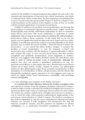
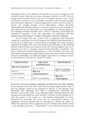
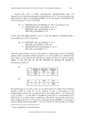
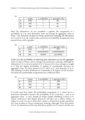
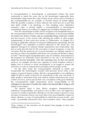
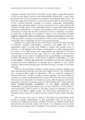
Show Chapter IV. The Utility-Maximizing Model of Rationality: Formal Interpretations 142 (1) F weight $100 x probability 1 = aggregate value 100 G $90 1 90 H $80 1 80 Since the alternatives do not constitute a gamble, the assignment of a probability of 1 to each alternative does not change its aggregate value to Percy - nor, therefore, its place in Percy's preference ordering: He still prefers F to G and G to H. By contrast, the second set of probability assignments does present Percy with a gamble: (2) F weight $100 x probability .2 = aggregate value ◊20 G $90 .000000000001 ◊.000000000009 H $80 .799999 ◊63.99992 In this case, the probability of achieving each alternative revises the aggregate value of each to Percy, and so changes his preference ordering. Although he still prefers F to G, he now prefers H to F because H is close enough in weight to F that the higher probability of getting H considerably increases its aggregate value. So Percy prefers H to F and F to G, and therefore H to G. This ranking is neither irrational nor remarkable in its degree of risk aversion. The third set of probability assignments has a different effect: (3) F weight $100 x probability .2 = aggregate value ◊20 G H $90 0 $80 .8 0 ◊64 It would seem that under this probability assignment, G is ruled out as a preference alternative because the probability of its occurrence - and so its aggregate value - is zero, despite its dollar weight. (Similarly, if there is no chance whatsoever that Rupert Murdoch will give me a billion dollars, it makes no sense for me to claim that I prefer a modest but steady paycheck.) So G has no place in Percy's preference ordering. Although Percy does prefer H to F, it is therefore not the case that Percy prefers F to G, and so not the case © Adrian Piper Research Archive Foundation Berlin |