| OCR Text |
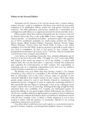
Show Rationality and the Structure of the Self, Volume I: The Humean Conception 563 their own professional power or status in the field. Their ability to discern, independently of the professional repercussions of doing so, whether and to what extent an argument meets these standards, whether it be their own or someone else's, and regardless of the power or status of the individual who makes it, can be an important source of professional pride and self-confidence that more than outweighs the disadvantages of whatever power inequalities they may experience. Indeed, as I argued in Chapter I, most philosophers recognize the personal commitment to and application of these standards of competence as the great equalizer that makes professional power imbalances irrelevant to unbiased judgments of philosophical worth. Of course not all individual philosophers invariably rely on these standards in making such judgments. Sometimes some individuals are too pressed for time to read a person's work carefully, or too far removed from the person's area of specialization to be confident of their ability to judge its worth accurately. In such cases, some may rely on other criteria they believe bear a lawlike relationship to philosophical worth, such as the person's educational pedigree, department ranking, class or ethnic background, gender, or race. And sometimes their high regard for these other criteria, which bear no lawlike relationship to philosophical worth, obscures or outcompetes the standards of philosophical competence that define it. The result is class-, gender-, or race-biased professional judgments that trade philosophical worth for sociocultural status; and thereby both drag down those standards of competence, and also reinforce the power imbalances that those standards of competence were supposed to equalize. When an eminent philosopher of Baier's stature flouts these standards, her audience gets two messages: first, that she does not consider herself to be bound by them; and second, that she does not regard them as important. If the first message accurately represents her thinking, so much the worse for the quality of her work, regardless of the disciples she may attract. But if the second does, so much the worse for the quality of the discipline, whether one subscribes to the enterprise of Socratic metaethics or not. For the effect of the power, visibility and influence of her example is to ridicule, not only those standards, and the central intellectual values that make philosophy worth doing despite the professional corruptions of the field; but in addition those who view these standards and values as an important source of philosophical integrity and intellectual independence. So it is not enough simply to observe that Baier often commits the genetic fallacy, or the inductive fallacy, or depends on ad hominem argument, any more than it would be enough merely to observe that she substitutes biased personal remarks for reasoned argument. These neutral observations do not address the public effect of her "experimental" methods. Baier rightly argues that we must trust others to discern our personal bias because we are so bad at discerning our own (MP 194). But we are not so bad at it that we cannot be © Adrian Piper Research Archive Foundation Berlin |