| OCR Text |
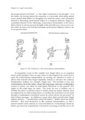
Show Rationality and the Structure of the Self, Volume I: The Humean Conception 179 46 structurally or intentionally instrumental. We have already seen in Chapter III, Section 4.1 that the relation of actual physical behavior to the end of a basic action such as raising one's arm is structurally constitutive if the physical behavior is invariably linked with that end, i.e. if the description of the one is equivalent to the description of the other. Here the physical behavior of raising one's arm is distinct from that of one's arm rising, although both might be nonintentional under certain circumstances (for example, I might reflexively and unintentionally raise my arm in response to the national anthem, or to a random synaptic firing. These cases are different from those in which my arm simply goes up, without any experienced connection to my sense of agency at all, as in hypnosis.). There is no structurally instrumental element in this relation if the end is not a conceptually distinct consequence of the physical behavior: The end of raising my arm is not a causally or conceptually distinct consequence of my physical behavior; it is my physical behavior. This description is satisfied by many basic physical actions. Therefore, more complex actions that include them include a structurally noninstrumental element as well. Similarly, the relation of actual physical behavior to the end of a basic action is intentionally constitutive if an agent's intention to perform that physical behavior is inextricably linked to her intention to achieve that end; if a fortiori, the performance of that actual physical behavior is her end. There is no intentionally instrumental element in this relation, if she does not intend to perform the physical behavior in order to achieve the end. Again this description is satisfied by many basic physical actions. Therefore, all more complex actions that include them include an intentionally noninstrumental element as well. So the utility-maximizing ideal that views physical human action as theoretically interesting or valuable only because of its instrumental relation to the ends it enables us to achieve is not a tautological consequence of our concept of action as described by its ends. The explanatory origin of 47 this distinctive stance lies elsewhere. The distinctiveness of the utility-maximizing ideal as a perspective on action illuminates some further implications of utility theory. To define rational action in terms of efficiency or utility-maximization means that the fractional ratio of the resources an agent expends in action to the number and importance of ends she achieves should be as small as possible, and the 46 Although the single end interpretation (Chapter III, Section 2) shows that utility theory requires us vacuously to construe it that way. 47 See Max Weber, The Protestant Ethic and the Spirit of Capitalism, Trans. Talcott Parsons (New York: Charles Scribner's Sons, 1958) and Albert O. Hirschman, The Passions and the Interests (Princeton: Princeton University Press, 1977). © Adrian Piper Research Archive Foundation Berlin |