| OCR Text |
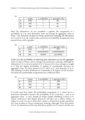
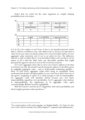
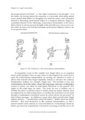
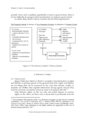
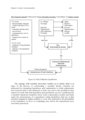
Show Rationality and the Structure of the Self, Volume I: The Humean Conception 133 -10 -9 - Mozart's "Jupiter" (me) -8 -7 -6 - Trollope Sr. (me) -5 -4 -3 - "The Simpsons" (me), Mozart's "Jupiter" (you) -2 - Trollope Sr. (you) -1 - "The Simpsons" (you) Some third party, appointed to collate a social utility function from our respective preferences, might well reason that I didn't seem to mind Trollope Sr. all that much, whereas you didn't seem to care for Mozart's "Jupiter" all that much more than Trollope Sr. On that basis we both might be sentenced to a steady diet of Trollope Sr. - even though both of us in fact most preferred Mozart's "Jupiter," and to the same degree. The subjective degree of our respective preferences for each of these alternatives cannot be ascertained despite their aggregate numerical values. So although each of us can assign cardinalities to the options presented, my preferences cannot be given a verifiably accurate cardinal ranking on the same scale as yours. The difficulty is nevertheless not a special case of a private language, first-/thirdperson asymmetry, or other minds problem. No such calibration could be objective in the sense utility theory requires, even if the term "utility" had some fixed reference to a qualitatively identifiable inner state, and even if that state were empirically observable and individually quantifiable by means of some overt behavioral manifestation. To see this, suppose there were some sort of natural physiological barometer that all human agents had, such as a pale pink "utility mole" in the middle of our foreheads that turned bluer as one felt more overall satisfaction. Suppose further that my utility mole turned bright cobalt blue when I received $500.00, whereas yours attained that hue only upon receiving $500,000.00. What would that demonstrate? Surely not that I was objectively more satisfied overall with my $500.00 than you were with your $500.00. My satisfaction with my $500.00 might still be less objective satisfaction quantitatively than your dissatisfaction with yours, even though my utility mole is bluer. And surely not that I was just as objectively satisfied overall with my $500.00 as you were with your $500,000.00. My satisfaction with my $500.00 might still be far less objective satisfaction quantitatively than yours with your $500,000.00, even though our utility moles were the same shade of blue. Thus the problem about making interpersonal comparisons of objective utility does not disappear by conjuring a solution to the problem of other © Adrian Piper Research Archive Foundation Berlin |