| OCR Text |
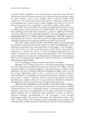
Show Chapter II. The Belief-Desire Model of Motivation 74 circumstances. The self then achieves full realization to the extent that it succeeds in satisfying those desires. Indeed, on the desire model of motivation, objects of desire are by definition external to the self that adopts them, even if they consist in an internal modification of some aspect of self or character. The Humean self is heteronymous, to use Kant's term, in that the conditions of its expression are objects or states of affairs that are psychologically and/or spatiotemporally external to the self in its present state. This external relation of the self to its desired objects motivates actions performed in order to appropriate those objects.21 So the full realization of the Humean self consists in bringing into existence those extrinsic desired states of affairs, and regarding them as newly incorporated satisfaction-states of the self. To become a better person of a specified sort, or to acquire a condominium, or a few moments of peace conceived as objects of desire makes of them psychologically (and perhaps spatiotemporally) distant entities in relation to the present state of the self; entities which the self approaches with a realistic plan, not only for the satisfaction of its desires, but thereby for the appropriation of the objects of those desires. As satisfactions of the self, former objects of desire are then available for recycling as instrumental resources in the service of further objects of desire: The few crumbs I crave today fuel my pursuit of a piece of the pie tomorrow. These further objects nevertheless remain remote from the self in its present incarnation, as they must, in order to provide its structure and present motivation. The objects of desire to which the self is committed thus provide it with an evaluative perspective on its internal states that is remote without being detached. It is remote in that it regards the present internal state of the self from the perspective of a future desired object or state of affairs that the self at present lacks. A remote evaluative perspective on the present state of the self follows from one's identification with those objects of desire that the Humean self is conceived presently to lack. From the perspective of the present state of the self, the future goals to which one aspires may indeed promise both satisfaction and value. But from the perspective of those future goals, the present state of the self must seem unsatisfactory at the very least. It is a feature of any self conceived heteronymously that there is a seesaw between present state- and future satisfaction-perspectives that must tilt both ways without being fully anchored in either. Some degree of remoteness from the present state of the self might, perhaps, be avoided by a being that was fully identified only with its desiring-states and never with their intentional objects. "This relation, whether based on inclination or on rational ideas, can give rise only to hypothetical imperatives: 'I ought to do something because I will something else."' Immanuel Kant, Groundwork of the Metaphysic of Morals, trans. H. J. Paton (New York, NY: Harper Torchbooks, 1964), Ac. 441; italics in original. 21 © Adrian Piper Research Archive Foundation Berlin |