| OCR Text |
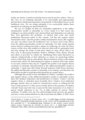
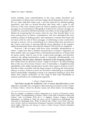
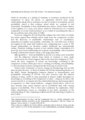
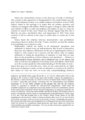
Show Chapter VII. Nagel's Internalism 262 effective mental event whose causal influence depends on its intentional content. I do say this at length in Volume II, Chapter V.3.1. Section 1 sketches the dilemma for a self-described Kantian who believes in the rational necessity of moral principle as a motive to action on the one hand, and in the universality but subjective contingency of desire on the other. I contrast Nagel's with Kant's solution to this dilemma: Both ground moral principle in a rationally inescapable self-conception that thereby motivates us to act on it. I evaluate the viability for this role of the particular self-conception that each proposes. Section 2 situates Nagel's analysis of prudential reasons for action in the context of his commitment to transpersonal rationality. Through analysis of his distinctions between timeless versus dated reasons on the one hand, and tenseless versus tensed judgments on the other, it traces his argument for the rational and therefore motivational inescapability of prudential reasons independent of any present or intermediary desires. Section 3 looks at Nagel's extension of his analysis of prudence to the analysis of altruism, the case in which the person on whose behalf one undertakes action is remote in space rather than in time. It examines his distinction between objective and subjective reasons, and evaluates the thesis that objective self-interested reasons give one reason to act on behalf of the person whose interests they denote. Nagel offers a second distinction, between the impersonal perspective on ourselves as one individual among many; and the personal, perspectival vantage point to which my analysis of funnel vision in Chapter II is often indebted. Here I examine Nagel's analysis of altruism as presupposing necessary connections among objectivity, impersonality, and universality; and his corresponding rejection of solipsism. I consider whether this argument yields the rational inescapability of ethical principle on which his thesis rests; and conclude that it does, at least, provide the conceptual resources for such an inference. 1. Nagel versus Kant 1.1. The Kantian Dilemma The basic aim of Nagel's discussion is to show that to be rational is, among other things, to be capable of being motivated directly by altruistic principles and considerations - not merely by a desire of which these principles are the object. This aim expresses the transpersonal Kantian assumption that reason can be motivationally effective; not that desire is not, but merely that desire is not the only, and certainly not the most important, motivationally effective element in the self. Nagel's idea is that if we are rational, altruistic principles and considerations themselves can inspire us to act on them; indeed, that this is part of what it means to be rational. By "altruistic" Nagel does not mean only acts of extraordinary heroism or self-sacrifice, but "any behavior motivated © Adrian Piper Research Archive Foundation Berlin |