| OCR Text |
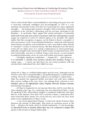
Show Chapter XI. Brandt's Instrumentalism Like Rawls, and following in the footsteps of his metaethical strategy, Richard Brandt, too, is an Instrumentalist. His reliance on Instrumentalism undermines his attempt to morally justify his normative theory in a similar manner, even though his normative moral theory is a species of Utilitarianism rather than Social Contract Theory. In this chapter I argue that close examination of Brandt's argument in his A Theory of the Good and the Right suggests that the primary determinant of an agent's choice of the Ideal Code Utilitarian Society is not her having undergone cognitive psychotherapy as Brandt claims, but rather her being independently benevolently motivated. But in this case, the concept of instrumentally rational choice is doing no justificatory work. For it is - again - vacuously true that an agent will choose what she has special motivation to choose, other things equal. This fact does not succeed in justifying her choice for us unless we, too, have that special motivation. But if we do, then the argument does not succeed in justifying this choice as instrumentally efficient whatever ends we have, i.e. objectively. Brandt's characterization of rational desires as those which survive cognitive psychotherapy suggests a different and more powerful method of moral justification that renders dispensable his Instrumentalist strategy. Section 1 contrasts Brandt's Instrumentalism with Rawls's. Although they are united in their de facto commitment to the Humean conception of the self, Rawls proves to be the more consistent Humean, whereas Brandt incorporates central Kantian tenets, explored further in subsequent sections. Section 2 describes the dilemma generated by his Instrumentalist mode of justification, and also the problems raised by his appeal to the reader's self-interest. Section 3 examines Brandt's analysis of desire, and the Kantian implications of his stipulation that a belief is the precipitating cause of action. Section 4 traces the conditions Brandt imposes on specifically rational desire, with particular attention to his conception of cognitive psychotherapy. Although these retain the universality of his criterion of rational desire, they imply that there are no universally rational desires themselves. Section 5 contrasts Brandt's account of prudence with Nagel's. But we see that Brandt's analysis of prudential motivation in fact accords with Nagel's Kantian one rather than opposing it. Section 6 looks at the irrational desires which Brandt claims cognitive psychotherapy extinguishes, and argues that this criterion does not succeed in distinguishing rational from irrational desires. Section 7 argues that on Brandt's account of benevolence, it is rational neither for a benevolent agent nor for a self-interested one to choose the Ideal Code Utilitarian society. Section 8 concludes that his conception of cognitive psychotherapy has not been exploited to maximum effect. |